How Private Foundations Can Support Civic Education — A Spotlight on Lumina Foundation


This interview was conducted in conjunction with the CivxNow Policy Summit. See more interviews and case studies about how philanthropy is engaging in civic education here.
This past spring, The Indiana General Assembly passed House Bill 1384, which requires that every student in the Hoosier State complete a one-semester course in civic education in either sixth, seventh, or eighth grade, and that the state’s board of education and department of education establish standards for civic education by July 1, 2022. In addition, the new law calls for Indiana to form the Indiana Civic Education Commission, a 15-member panel that would include teachers and state officials, as well as members of the business community.

The legislation, which was sponsored by both Republicans and Democrats and signed into law by Governor Eric Holcomb on April 8, 2021, passed nearly unanimously: 49–0 in the state Senate, and 96–1 in the state House of Representatives.

The new law responds to a dire need in Indiana, as the state ranks in the bottom 15 percent for both voter registration and turnout.

For the philanthropy world, the law presents an interesting model for how private foundations can be involved, especially because they cannot lobby directly for legislation. Still, the Indianapolis-based Lumina Foundation played a central role — not by lobbying, but by funding the Indiana Civic Education Task Force, which conducted both the research and coalition-building necessary to pass the law.

In the following interview, Tim Robinson, Lumina Foundation’s Vice President of Administration and Partnerships, details how exactly the foundation supported the creation of the Indiana Civic Education Task Force that was chaired by Lieutenant Governor Suzanne Crouch.

What was Lumina’s previous portfolio around civic education that made this initiative in Indiana a fit for the foundation?

Tim Robinson: The reason why I’m involved in this particular part of our business is I’m responsible for all the civic engagement work that we do in central Indiana. And the reason why that’s important is because we’re a national foundation. We sit in Indianapolis and so we think about things that we do in Indianapolis differently than we do about other locations. So in other words, if someone came to us from San Diego and said, “We’d like you to sponsor such and such that’s committed to our community,” we would not likely support it because our whole foundation is based on post-secondary attainment and achieving a national attainment goal. But if the request comes to us from Indianapolis, we will give attention and consideration to it because of who we are in this community.

That leads to the overarching question: What type of foundations should get involved in this type of work?

Tim Robinson: We think about how we influence postsecondary attainment. If we took every dollar in our foundation and distributed it out as scholarships, we would not likely come close to hitting our post-secondary goals or addressing the systemic and institutional barriers that prevent some learners from pursuing educational opportunities after high school. So our approach has always been on systems change and institutional changes. So we do have a state policy team. We have a federal policy team. As you probably know, as a private foundation we cannot legislate and we cannot lobby. We cannot take any advocacy positions opposed to specific legislation. In this particular case, that’s not what was asked of us. What was asked of us was would we be willing to financially support the creation of a task force to look at the issues related to increasing civic engagement. And so looking at the legal ramifications of that, that’s not advocacy. In fact, we were very clear that once the task force came forward with recommendations, if those recommendations were included in the advocacy, we were not going to go into phase two of that particular work. We were going to limit it solely to the creation and the funding of the advisory task force.

What entity first asked you to get involved, and why did you say yes?

Tim Robinson: The Indiana Bar Foundation came to us because they had been running civic education programs to the high schools and they wanted to know what other states were doing so they could replicate it.

Civic engagement is personally important to me, but that can’t be the basis on which we make it a foundation distribution. We also had introduced a Racial Equality and Justice Fund back in 2017 after the events in Charlottesville, and we put a couple of million dollars into it. After last summer, we reseeded it with an additional $15 million dollars. Those are some of the things that we’re thinking about — and this is specific to at least how I think about the central Indiana portfolio. But this wasn’t a mandate from the foundation. This was me trying to put my arms around this particular portfolio and how it would be distributed in Indianapolis.

So I came up with some buckets, for lack of a better word. The first one was education. Obviously that’s our primary focus — and this is particularly for people of color, activities associated with people of color who we care about in terms of the racial justice equity fund. Number two was entrepreneurship and wealth creation. The third was civic engagement, especially the disengagement of black people in the political process. We’re not telling them how to vote, but we want them to know how to inform themselves on the issues. And then number four was just general well-being. How do you think about the mental well-being of black people and brown people?

This opportunity had presented itself. That was a way that we can lift up that particular area and say what can we do to inform and make sure people are aware of the importance of engaging in the civic process. So the head of our foundation had reached out to me. I sponsored something else on their behalf. And in the course of the conversation, that is what we evolved to. And that’s why we were willing to support the creation of the task force.

How does civics education fit into the foundation’s goals?

Tim Robinson: If you think about our postsecondary goals, we do think it’s important for people to have post-secondary training. And by that I don’t mean just a college degree, whether it’s a bachelor’s or associate’s degree, because all sorts of credentials and certificates can lead to gainful employment. One of those important things is civic engagement, because when you know more, you participate more, and you’re more engaged in your communities. And that’s for the benefit of everybody. And so civic engagement has always been sort of this sub-priority of our national attainment goals.

What is the state of civic health in Indiana?

Tim Robinson: Poor, disappointing, frustrating. [It’s not just the number of people who are voting], but participation at the school board level, participation at the local level is particularly bad.

Was there any kind of metric that gave you a sense of why Indiana was falling short?

Tim Robinson: I think it was generally just apathy. People just didn’t feel like they understood the issues enough to be engaged in the issues. And this isn’t an excuse, but you have to be engaged at every single level. But to be on the school board — think about all the issues the school board has to deal with — then you move to the city and then you have to deal with all the municipal issues. Then you go to the state. If you think of the federal issues involved in international issues, it is so overwhelming. I think people just throw their hands up and say, “I have no idea. So I’m not even going to participate.”

Exactly what was the role that Lumina played beyond the funding?

Tim Robinson: We funded the creation and the operation of the task force. So there was that check that had been written. I told them very specifically, I did not want anyone from Lumina to serve on the task force, because what I didn’t want to happen was there would be some implication that Lumina was trying to influence legislation sort of surreptitiously. They invited me to participate in some of the calls, and I said I would participate in the first call just because they wanted to acknowledge the contribution we made. But then I was going to remove myself from any of those conversations, except for those with Chuck Dunlop [executive director of the Indiana Bar Foundation in Indianapolis]. He would send me updates, he would send me reports, and he would send me things as required under the grant agreement. But I really wanted to create an arm’s length transaction so that there would be no appearance of a conflict.

Is that something every foundation should do?

Tim Robinson: If you’re a private foundation like Lumina is, yes, you want to be very clear about whether you are in the role of trying to get legislation passed or if you are lobbying for something specific. We as a private foundation are allowed to inform people about legislation. We’re allowed to inform people about the issues related to legislation, but we cannot give any indication that we are moving towards a certain type of legislation or particular outcome. And we’re generally very conservative in that regard. There would be some other foundations who may clearly walk up to the line. But we are very far away from the line. The way that we see ourselves, at least in the education marketplace, is as a neutral, bipartisan provider of information. We don’t want anyone to think that we’re taking one side or another. We just want to be the honest broker in anything related to post-secondary attainment.

Did you have to put in place standards and practices or did you already have those?

Tim Robinson: We generally already have those. So when we set out the terms of the grant, I was very clear about this at the very beginning. “Here’s what I’m willing to do. And here are the gates that we’re going to put around this, so that people will only see that it was the creation and the support of the task force. Anything beyond that Lumina is not going to be a part of that.” Chuck really wanted to acknowledge the philanthropic gift, and I appreciate that. But I didn’t want him to really promote it. I didn’t want it to appear that we’re trying to somehow do something that we shouldn’t be doing.

I imagine that would be hard for some foundations.

Tim Robinson: Some people do walk up to the line. But our particular position is that we want to remain the honest broker.

Does that mean you approached publicity for this differently than you do with other grants?

Tim Robinson: There are some grants that we do want people to know about. We don’t do it just for our reputation. We do it just because in our space, if Lumina comes in and provides money, that sometimes is an endorsement, and sometimes you want that endorsement to be known because it brings other funders into the mix. It’s not for any good egotistical reason. In this particular case, I would rather have a much more muted publicity. So if they are publishing something, then there’s a little thing at the bottom, “funded by Lumina Foundation.” I’m fine with that. In a press release, I would say you do not have to include this in the press release because we don’t want any of that notoriety.

That poses an interesting challenge, though, because if you want partners and you’re not putting your name out there, how do you go about doing that?

Tim Robinson: Well, in this particular case, I don’t know that they were looking for Lumina to be a lead funder to invite other funding opportunities. The other issue was that the Lieutenant Governor, Suzanne Crouch, was on the Task Force, there were other legislators, state representatives on there. I just did not think it was appropriate for us to be on the same task force. We have restrictions on the government interaction that we have.

How do you keep that firewall with the grantee organization?

Tim Robinson: The way that we generally would do that is there will be a grant agreement that will lay out what we’ve agreed to and what we are giving you the money to do. And we then leave it to them to figure out the best way to do it. We try not to be too restrictive, but we are restrictive about a couple of things. One of which is you may not use this for lobbying, you may not use this for advocacy. You may not do anything with these funds that would imperil our tax-exempt status. And if you do, then you either have to pay us back or we’ll have to take some action. And so other than that, we do not try to restrict them too much. I do ask for reporting.

Did Lumina have goals for this or firm outcomes that you wanted to see happen as a result of this grant?

Tim Robinson: That’s a really good question. This is why we do things differently in Indianapolis and Indiana, especially because we are focused on a post-secondary attainment goal, where metrics matter. We generally do impose a requirement from our grantees. For instance, we may say this work needs to generate X number of degrees or credentials because that will count towards our goal. But very little of the work we do in Central Indiana is connected to our scale. So there was nothing that was going to come out of this project that would have added to our postsecondary goal. So our goal is 60 percent by 2025 and we are currently just under fifty two percent. None of this work has any impact on that. So instead, what I do in those instances, I say, “You tell me what your goals are, and I’m going to hold you to your goals. I’m not going to hold you to the Lumina goal because that would be unfair because you couldn’t meet it anyway.” So they laid out. Here’s what we’re going to do. Here’s what we’re trying to accomplish. And then I have them report on it.

So were their goals/your goals met?

Tim Robinson: I think so. They had done the survey of teachers who were teaching civics and their engagement level. And I think there was an enthusiasm that this does work well, and then they can scale it up and make it more effective. And then ultimately, of course, their goal is more engagement. The one issue that I did bring up was racial justice inequity. What I did want to see was if they could particularly focus any of the work towards people of color. So were they able to disaggregate the data? And I don’t know that they were able to do that. But I think there was a general recognition that, yes, there are gaps between the of white households and black households and Latino households. These are the populations that we care about in terms of education. But I didn’t require them to report on that. I did say if you had that information, I would like to know it, but I don’t think it was a disqualifying metric.

So for other foundations, what’s your advice in terms of setting expectations?

Tim Robinson: Know what your boundaries are. Know what you can and cannot do. Understand what the grantee is going to do with it so it doesn’t jeopardize your foundation. And then be clear on why you are doing this. Are you doing it to fulfill a specific mission that you have as it relates to your foundation, or is it really more of your corporate citizenship role that you’re serving in your community?

And I would say that’s how Lumina defined it. We were very clear that this has nothing really to do with our mission. I think about some of the work that we do here as “mission centric,” which means it’s very specific to the goal. Then we have what I call “mission aligned,” which means it’s not mission-centric, but it’s adjacent. So, for instance, we don’t fund K through 12 education. We’re entirely post-secondary. But there are some times that you have to fund these things because you don’t get to post-secondary without K-12. And third is what I would call “goodwill,” which means it has nothing to do with our mission at all. It just means that we want to be a good corporate citizen, or it’s important to one of our employees. So we will give deference and consideration to it for those reasons.

How heavy a lift was this? How should other foundations evaluate how much it’s going to take from our team to pull off?

Tim Robinson: There’s an administrative process by which we evaluate all grants. And so this is not unique to any funder, but we have certain things that we require. We do charitability checks. So we want to make sure this organization can receive these funds. We require audited financials, board of directors, all these things that we submit. We ask them to submit a proposal. The proposal has a whole list of things that we want them to do. And then it comes out. Someone’s got to upload it into a system, someone has to review it, and then it goes in front of an executive team. So, you know, it probably took six to eight weeks to move it through the system. I’m the only one that manages these portfolios, but I’m not the only one who touches the paperwork that’s related to it. So I don’t think it’s a particularly heavy lift.
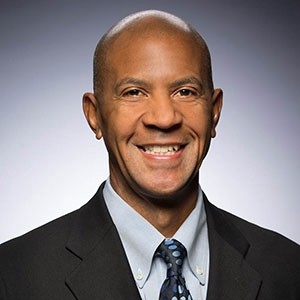

Tim Robinson, J.D., is vice president of administration and partnerships at Lumina Foundation, an independent, private foundation in Indianapolis that is committed to making opportunities for learning beyond high school available to all.

Before joining Lumina in 2017, Robinson was with PNC Wealth Management for six years, most recently as investment director for Indiana, where he was responsible for implementing investment strategies for high-net-worth clients. He also spent 13 years with Irwin Union Bank, where he managed the bank’s trust, investment, and insurance businesses.

Robinson also is an adjunct instructor at Butler University, where he has taught classes in business law, negotiations, and nonprofit governance for the past 20 years. He serves on the Indiana Humanities board and on committees for the Archdiocese of Indianapolis and Versiti Blood Center of Indiana.

How Private Foundations Can Support Civic Education-A Spotlight on Jack Miller Family Foundation

This interview was conducted by the Philanthropy Roundtable in conjunction with the CivxNow Policy Summit. See more interviews and case studies about how philanthropy is engaging in civic education here.

Right now in Florida, three major civic education organizations, the Bill of Rights Institute (BRI), the Jack Miller Center (JMC), and the Ashbrook Center have pooled their resources in an attempt to provide professional development for civics and history teachers in one of the country’s largest states.

The American Civics and History Initiative (ACHI), is an ambitious initiative to train more than 6,800 teachers in the Sunshine State — reaching more than 680,000 students — over the next two years though five-day institutes, seminars, and webinars designed to empower educators with rich, content-based programs and resources they can use in the classroom.

ACHI would not be possible, however, without the involvement of the Jack Miller Family Foundation, which is funded by Florida-based philanthropist Jack Miller. It was Miller that brought together BRI, JMC, and Ashbrook, and now is facilitating ACHI not just by writing checks, but by acting as a partner in the initiative, along with the Marcus Foundation, funded by philanthropist Bernie Marcus, who is also based in Florida.

The unique collaboration between organizations and foundations provides an interesting case study that others can follow — especially as these groups look to scale what they have started in Florida and potentially bring ACHI to other states across the country.

Below, you’ll read two interviews that discuss how ACHI came about its goals, and how the collaborative effort works logistically. The first is with Jonathan Greenberg, the Director of Freedom Initiatives at the Jack Miller Family Foundation, and Elisa Levy, Program Director at The Marcus Foundation. The second is with BRI President David Bobb and Ashbrook Executive Director Jeff Sikkenga.

Together, we hope the interviews provide insight from both the funder and the grantee perspective.

PART I — INTERVIEW WITH THE FUNDERS

Jonathan, can you tell us what are the foundation’s goals for the American Civics and History Initiative?

Jonathan Greenberg (Jack Miller Foundation): The goal is for every civics, history, economics teacher in Florida, in middle and high school, to have improved access to the documents of America’s founding and the historical record of America’s founding; to have a content-based education that they can fall back on, that they can use in teaching their kids and that they can then easily take and translate into what they do in the classroom.

The truth is that most teachers don’t get a lot of content. I think we’ve all talked about this at one point or another, that you can get out of school really knowing very little about the topic you’re taught. Well, we believe that the best teaching comes from deep learning, especially if you’re teaching America’s founding, especially in a topic like civics. In math, there are right and wrong answers, in science, there are right and wrong answers. It’s possible to just teach out of a book in civics, but it’s a lot harder. If you’re going to lead a conversation in your class, you have to really have significant roots in the topic that you’re teaching. And most teachers, through no fault of their own, don’t. Florida’s looking at changing that on a policy level, but we think that providing this information is the key to getting kids better prepared for the responsibilities and duties of citizenship. And so that is what we were hoping to accomplish. There are a little over ten thousand civics teachers in middle and high school in Florida. Our goal is to get every single one of them to take some of these professional development courses and be better prepared to teach kids.

That is not a small goal, it’s a big goal. You have made very clear that this takes collaboration, and it takes multiple people working together. Talk a little bit about the collaboration that you helped bring about for the ACHI.

Jonathan Greenberg (Jack Miller Foundation): Almost two years ago, Jack called together a group of 30–35 different organizations at our offices in the suburbs of Chicago. We put to them a simple question: What do we do? What can we do to turn the tide? This was before last summer’s protests and pulling down statues. But those of us who’ve been working in Civic Ed have known for some time that there was a brewing crisis. The wave crashed over America last summer. Jack put this group of people together, everybody showed up in the suburbs of Chicago, we had a long conversation about it…. What came out was that we needed to cooperate with one another.

Even organizations that shared similar missions and similar tactics were operating in silos and not working together. And I think probably all of our donors have complained about this at one point or another. And, it bothers Jack Miller, the chairman of the board of the Jack Miller Center. We had to go out and convince the Bill of Rights Institute and Ashbrook to work together on a project, on a handshake agreement that involved fundraising. We had to stitch that alliance together.

Why did you choose Florida as the place to focus first?

Jonathan Greenberg (Jack Miller Foundation): There are several reasons, the easiest of which is that Jack is a Florida resident. But there are a lot of structural and political reasons and demographic reasons why Florida made sense. So I don’t know if Florida is a purple state, but there are significant blue pockets in the state. It’s a large state. It’s an incredibly diverse state. And one of the things that Jack has always said he values is that every American kid, regardless of geography or demography, should be well grounded in America’s founding principles and history. And so working in Florida allows us to do this.

The Panhandle is very ethnically and culturally different than Miami Dade and Orange County. It has its school districts organized at the county level. So you’ve got some very large school districts and you have some very small school districts, and everywhere in between. It makes sense that way. And we also have a political climate in Florida where the sitting governor actually ran on civics. I’m not sure any other governor in America did that. But DeSantis actually talked about improving civics in Florida when he ran for governor. So you can say he has a mandate from voters to do it.

A lot of times grantmakers write the check and that’s it. What are the kinds of things that you have done beyond writing the check? How did you work closely with the grantees in a way that didn’t spook them?

Jonathan Greenberg (Jack Miller Foundation): One of the ways that we facilitate collaboration between the organizations is that we have a weekly Zoom call every Tuesday morning, that I effectively chair. The heads of the organizations and development directors of the organizations call in, along with a couple other key staff people, and so we’ve got the Jack Miller Center, Bill of Rights Institute and Ashbrook on a call with each other every week. We have organizations tell me what the agenda items are. And I go over those agenda items and every once in a while I’ll add something. But really, it’s their agenda of sharing. And what we found is that doing it this way actually makes the collaboration easier because none of the three organizations are leading. So it doesn’t have to be the Bill of Rights Institute and Ashbrook following the Jack Miller Center. It’s all three organizations working together. And I just chaired the meeting. I’m a not-so-disinterested fourth party. And so organizationally, we find that that works really, really well. It’s a further investment on Jack’s part, because obviously it involves some of my time.

The leaders of BRI, Ashbrook and the Jack Miller Center get together on these Zoom calls. And the first thing they’re thinking about isn’t me, me, me. It’s collaboration and working together and honoring agreements and making agreements by handshake — covid virtual handshake. And it’s been really exciting to watch these people who are so mission driven that they’re willing to come out of their silos and do this work together.

So what have been the major outcomes, Jonathan? Why is this working?

Jonathan Greenberg (Jack Miller Foundation): It’s hard to measure how something like this works because really the rubber hits the road when the teacher takes the information back to the classroom, teaches the kids. So it’s the actual effect we’re going to see later. What we can judge is how many teachers we’re reaching. So at the beginning of this exercise, all three organizations had already dealt with, taught, or had other professional development events with about 5,000 of the roughly 10,000 teachers in Florida. So about half of the civic teachers in Florida were already familiar with the Bill of Rights Institute, Ashbrook and Jack Miller Center. We only were able to have in-person events, which were organized by the Department of Education with the help of the Marcus Foundation. Before that, everything was virtual, 90 minute sessions and things like that.

But we’ve actually taught more than a thousand new teachers in Florida. Our goal at the beginning of this was another 2,500. But even with the restrictions that covid put on the three organizations, they were still able to bump that number up by over a thousand teachers.

So now, Elisa, the Marcus Foundation joins this effort at a certain point. When did that happen? And why did that happen?

Elisa Levy (The Marcus Foundation): We joined a year ago at the time of the ACHI launch. The key is the opportunity to both provide professional development to the teachers based on the core documents of American History and to intersect with an existing grantee, the Florida Civics and Debate Initiative where professional development opportunities can be leveraged. Both Bernie and Jack are philosophically aligned that every child needs to be educated based on the democratic principles of society. Our goal is make sure that children spanning K-12 have the opportunity to build a strong foundation upon which to make educated, informed decisions as community citizens

Why was it the right opportunity for your team? Yes, there’s a Florida connection and there’s an interest in Florida. There’s philosophical alignment. What was it about the project itself that made it the right investment?

Elisa Levy (The Marcus Foundation): We have learned a lot about all three organizations that are collaborating as ACHI and had already invested in the Bill of Rights Institute. This was an opportunity to scale throughout Florida and evaluate what a collaborative effort could accomplish. The ideal would be to have this nationally. The weekly meetings provide equal opportunities for sharing and implementing marketing, communication, training and other programmatic objectives.Through collaboration and the sharing of teacher lists, marketing and having one website for all three organizations, more teachers have been reached than would be reached through individual efforts and ultimately, more students are being reached.

So the collaboration seems to be the big focus here — the difference maker — for you and your foundation.

Elisa Levy (The Marcus Foundation): I also think it’s the opportunity to leverage that collaboration with existing grants like the Florida Civics and Debate Initiative. Recently, I had the opportunity to actually see 240 teachers on the ground at a professional development day where all 240 teachers got to rotate from room to room to room to understand how the core documents, such as the Declaration of Independence, the Bill of Rights, the Constitution and the Gettysburg Address and used as resources to teach critical thinking, citizenship, understanding how our government works and more. The teachers got to observe and participate with different teaching methods, for example, the Socratic method, a lecture method or through role playing and simulations. Imagine a consumer fair on civic education with different teaching styles, a variety of core documents and resources devoted to American History and Civics all with the same fact-based, conservative based philosophy. This was the introduction, a lighter version, where all teachers had an opportunity to taste different varieties and yet learn based on common democratic principles. When we refer to professional development opportunities, typically, we refer to American history and social studies teachers, but this teacher professional development workshop included debate coaches, drama coaches, and English literature teachers. So to me, that, again, is leveraging reach beyond the traditional American history teacher and reaching more teachers and reaching more students.

That is very cool. I think that’s a very innovative and different way of doing a program than what I’ve heard or seen before. Do you think this can be replicated in other places, especially because BRI, Ashbrook and Jack Miller Center all have a national presence?

Elisa Levy (The Marcus Foundation): Absolutely! I think that if the three organizations want to continue to work together and if additional funding is awarded, this effort can be transformational and national in its impact. And I think for the Department of Education and the State Department of Education to provide these development opportunities, for them, it was sort of like the light bulb went off in their head when they saw everybody partnering together, when they saw the collegiality. When they got to move from room to room and see the information presented and the teachers engaged, they recognized that it was a no-brainer. So if other State Departments of Education are receptive and they have to do this anyway, why could it not be replicated? I mean, I just think it’s a no-brainer. Absolutely. And the teachers want it.

So, Jonathan, I would love to hear what you are thinking about the next steps for the program and what is it going to take to actually replicate this?

Jonathan Greenberg (Jack Miller Foundation): So we’ve already had conversations with a number of different governors. The idea is to find states that will give us a thumbs up in terms of the state board of education, the commissioner of education, whatever setup they have. And frankly, where the governor is going to help us identify — and introduce us to — the people who are the big education donors in the state. They can tell you every conversation that we’ve had, governors and their staff, people love it when they find out that we’re not asking for state funding. The idea is to fund all of this privately and to do quite a bit of it in state.

So, for the most part, we’ve raised Florida dollars to pay for Florida teacher education. That may be a little harder in places like Nebraska and some other places. And I don’t think we’re ideologically committed that every dollar has to be from that state. Quite the opposite, actually. But I do think that there’s something to going to the major foundations in each state and saying that, if education is something that matters to you, you’re one of the biggest donors in the state, and this is going to impact your state this way….

I think we’ve mentioned Tennessee and Nebraska. We also had a conversation with Governor Hogan from Maryland not long ago. I think it’s like I said at the beginning of this, it’s been very important to Jack that this is across demographics. And so that includes red and blue.

We don’t just want this to be a project for red states. In fact, if we’re going to have one country that coheres as a single country, it can’t just be red states. So the idea is to make sure that blue state governors are involved. We’ve got a couple of states that are red states with Democratic governors, Kentucky and Kansas come to mind. So, you know, eventually we’ll reach out there. But effectively, we’re trying to go where to start off with low hanging fruit. So Tennessee, Nebraska, these are places where Jack has forged good relationships in the governors offices. In Texas, we have good friends with the Texas Public Policy Foundation. And we think that Texas is also a place that is ripe for this kind of investment and on and on. And I would like at some point to bring in other organizations.

PART II — INTERVIEW WITH THE GRANTEES

David, could just give a little bit of a history of how the American History Civics Initiative (ACHI) came to be. Did you approach Jack Miller or did Jack Miller approach you, what was the genesis?

David Bobb (Bill of Rights Institute): Well, it’s been a true collaboration in every sense of that word. I work at an organization called the Bill of Rights Institute (BRI). We’ve been doing this for a little over two decades. We’ve been rowing in the same direction as the Ashbrook Center and now the Jack Miller Center for that length of time, and of course, had various knowledge shares. Our paths would cross. There’d be different points of intersection. But when Jack Miller pulled together a forum with Jonathan Greenberg and some other funders, Jeff and I found ourselves front and center in a conversation with Jack and a whole room full of people. And it was out of that conversation, really, that grew this idea. Why don’t we really formalize things? Why don’t we throw in together and make this more intentional? It really did help to have funders leading the way, but it was a natural programmatic fit and it’s been a really fruitful partnership since that day.

Jeff, you were in the same boat and went to the same meeting. What were your thoughts about this, coming from Ashbrook?

Jeff Sikkenga (Ashbrook): As David said, it was collaborative from the very beginning. It was a Constitution Day program that Jack put together, and David and I were speaking on the same panel. We were up in front and realized, based on the conversation that we were having with each other and with the other folks in the room, that there really was an amazing natural fit. As David said, Ashbrook has been doing this for several decades as well. Of course, we know the Bill of Rights Institute. Our paths crossed many times, and we’ve had conversations. But I’m not sure if we’d ever been in the same room talking about the same kind of programs for teachers around the country. It was really a coming together in that moment. And then the conversations with Jack right at that time and then shortly after that really started the ball rolling.

And when you came back to your organization, Jeff, what was the feedback from your staff and your board about this initiative?

Jeff Sikkenga (Ashbrook): Very positive. It was one of those situations that I’m sure entrepreneurs find themselves in, when people ask, “surely that’s been done, right?” And then they say, “Oh, it hasn’t been done…. Wow, market opportunity here.” It was really like that. It was Jack bringing us together in that room for that conversation that really showed us the opportunity.

What is the dynamic like working with the Bill of Rights Institute and the Jack Miller Center? How did you guys move forward together with this initiative? Did you have a plan? What are your communications like?

David Bobb (BRI): The enthusiasm was there from the get-go from the Bill of Rights Institute team. I think that when you’re rowing in the same direction, you have the opportunity to really see a force multiplier and really be intentional about knowledge sharing and the ways in which we can reach teachers. Bringing in the Jack Miller Center was also, I think, a natural fit. A number of years ago, when Tom Kelly was coordinating that effort for Jack, the center ventured into civics. As our nation looks at turning 250 years old, we have a big question in front of us. And I think all three organizations are on the same page and saying that to get the answers for the next 250 years and to chart our course, we have to look to the Declaration and the Constitution. We have to look to those founding principles. And that was the natural fit.

So the conversation is flowing from that and flowing from the idea: Hey, let’s put some real substance to this. Let’s have a memorandum of understanding.

There were lots of conversations, meetings, brainstorms, all of the good things that happen in an entrepreneurial environment. And out of that came a really clear strategic plan. I was really amazed at how really seamlessly and quickly we moved into that. And we’re able to say, “Here’s how we can each execute on our own mission. But what we’re going to get out of this effort is going to be greater than just adding up the individual parts.”

And what was the dynamic like with the funders? How was the dynamic between the funders and the grantees?

Jeff Sikkenga (Ashbrook): Well, that’s a great question, because I think when we had approached funders before collaboratively, the response was again, “How come more people aren’t doing this already? This is a great idea.”

Funders are always looking to maximize the return on their investment, and rightly so. And they realize that when you get a collaboration, that’s more than just the sum of the parts. It’s a force multiplier, and that’s a better return on investment. And so there’s no question that funders are excited in and of itself for this collaboration and what we can do together, but also as a model for other groups and other organizations who all are rowing in the same direction.

Ashbrook and BRI were both running initiatives in Florida before ACHI came into play, and in other states as well. Why was Florida the best state to do the test pilot of this initiative?

David Bobb (BRI): There’s a lot of ground to cover in a nation of 330 million people. One of the things that we looked for was really what is a state big enough to be a large challenge for us, but one that is emblematic of some of the division that exists around our country. When you teach civics and history, you realize very quickly that this is an extremely polarized topic. And yet all three organizations are dedicated to common reference points and anchors. Think of teaching the primary source documents, teaching the principles of the Declaration and the Constitution. So being on the same page allowed us to say, OK, where is it that we have a pretty good sized footprint between the two organizations that bring the most experience to bear? And how could we create an atmosphere in which the Jack Miller Center’s work would be best received? And so we did some baseline work. We were already reaching a pretty good number of the teachers in the state of Florida, such that we could, after two years, potentially be reaching a full majority of the secondary school teachers of American history and civics. That was our goal from the outset. We chose Florida as a pilot state because it is emblematic of the kind of challenge that we can tackle thereafter.

Jeff Sikkenga (Ashbrook): I would add that Florida is an amazingly diverse state: rural, urban, suburban, north, south, east, west, and a growing student population. The diversity of geography, of demography, of regions really made it ‘if you can do it in Florida, you can do it anywhere.’

Would you also say that the government of Florida helps, having a friendlier governor who might have been more interested in this idea, and maybe a more supportive State Department of Education?

David Bobb (BRI): We definitely factored that in and want to continue to do so as we evaluate which next states are going to fit the strategic priorities of the American Civics and History Initiative. We have been pleased to see that the state’s climate, both from previous administrations and the current one, has created an environment that sets up a lot of these incentives in a pretty good direction. That’s not true of all states. And it’s not like it’s a blue versus red thing either. There’s a lot going on when the government gets involved in education. And one of the things I think that really knit us together is that we believe in a kind of groundswell effort. We’re not insistent, nor do we depend on, bureaucratic openings for our work. We’re really going directly to the educators. And that’s a common part of our business model. And I think that’s why, regardless of the political climate, we want to be in every place where we can make a difference. And Florida has proven to be a state in which we have found good partnership opportunities. But it’s not the only reason we’re in the state.

Jeff Sikkenga (Ashbrook): The initiative really is a grassroots initiative, and we will start in Florida. Then if everything works well, we expect and plan to expand, but that’ll be from the ground level up, not from the top down. I think it’s fair to say that too much change has been attempted from the top down in civics and history, and often it just doesn’t work. It just ends up being another series of unfunded mandates on teachers and students and classrooms and schools. We much prefer to partner directly with the teachers in the school districts, and build up.

In your strategy, as you think about expanding into other states, do you have an idea or kind of a path forward in that?

David Bobb (BRI): One of the exciting things about working with Jack Miller and the Marcus Foundation, and the Impact Fund, is that if Jack Miller had his way, we’d be in the other 49 states and DC tomorrow. We love that incredible enthusiasm that he’s brought to this project. He’s an amazing partner, an amazing catalyst. That being said, Jack and our other partners and the three organizations really know that for us to grow this in the way that is going to be built for the long term, we really want to take time to evaluate and be able to learn from our experience in Florida. So we’re right now setting up a kind of decision making framework for saying what’s next on the horizon. Let’s pick maybe a handful of states, identify them, prioritize them, but in so doing, really establish these are the criteria that are going to serve us well.


Jonathan Greenberg is the Director of Freedom Initiatives at the Jack Miller Family Foundation, serving an organizing, communications, and advisory role for Mr. Miller’s extensive philanthropic efforts.

Elisa Levy is the Program Director at the Marcus Foundation, leading and advising the Children’s portfolio area by developing and executing strategies with existing and potential grantees.

David Bobb joined the Bill of Rights Institute as president in 2013 and has worked for twenty years at the intersection of civic engagement and education reform.

Dr. Jeffrey Sikkenga joined Ashland University faculty in 1997 and serves as Executive Director of the Ashbrook Center and professor of political science.



Civics in the Spotlight Throughout Spring State Legislative Sessions

This spring, the CivxNow policy team tracked nearly 90 bills in 34 state legislatures pertaining to civic education. The bulk of these bills were designed to strengthen K–12 civic education, and many made it across the finish line with bipartisan support as legislatures adjourned for the summer.

Among the highlights were Oregon entering the ranks of 40 other states in requiring at least a semester of civics for high school graduation (Rhode Island also has active legislation on this front), and new middle school civics course requirements in Indiana and New Jersey.

Indiana joined Colorado and Nevada in strengthening state civics standards or requirements. Indiana and Colorado’s proposals are now signed into law. Nevada’s is pending in the House after passing the Senate, and would create a state civic seal program for students, emulating similar distinctions in at least six other states.

Utah adopted a experiential civics pilot program for the coming school year, and Florida passed a “civics practicum” option for high school students pending Governor DeSantis’ signature. Finally, the Indiana law creates a permanent state commission of civic education, and our Georgia partners are seeking to do the same with their state department of education.

Despite this remarkable bipartisan progress, it’s important to acknowledge the late-developing, but fast-moving efforts in at least 27 states to limit teaching of so-called “divisive concepts” like racism or sexism, or prohibit use of specific curriculum like the New York Times’ “1619 Project” through legislation, executive actions, or both. Several of the former are already signed into law.

In some cases, the new mandates conflict with existing standards, making compliance confusing for teachers, schools, and districts. Moreover, discussions of current and controversial issues have been proven to foster students’ civic knowledge, skills, and dispositions.

Spotlight on Civics in Spring State Legislative Sessions

CivxNow has been tracking proposed state legislation impacting civic education since January. At least 87 bills or resolutions addressing civics were filed in 35 states. Two are already signed into law, thirteen failed to advance, with the balance in various phases of legislative or executive consideration. Some of these proposals represent significant advances for civics, others are mostly window dressing, and a few would be detrimental to local control of civic education.

Among the most promising developments are:

  • Utah’s civic learning pilot program was shifted to the 2021–2022 school year (via HB 124) and signed into law by Governor Spencer Cox (R);
  • Virginia Governor Ralph Northam (D) signed legislation (HB 1940) empowering its Department of Education to develop guidelines for students for excused absences related to community participation;
  • Florida’s legislature passed a bill (S146) establishing a civics practicum for high school students and a school recognition program for civics; small differences between the two chambers must be reconciled before it advances to the Governor;
  • Georgia’s SB 220 would create a state civics commission and it passed both chambers; it advances to Governor Kemp’s desk for signing; and
  • Oregon’s SB 513 would add Oregon to the ranks of 41 other states with a high school civics course requirement; it passed the Senate on a strong bipartisan vote and heads next to the House.

State-by-state Bill Tracker

Momentum for Civics in the States

So far, in the 2021 state legislative session, over eighty bills related to civic education have been introduced in 23 states. This is a significant increase in the number of civics bills introduced in the past several years and shows the momentum for strengthening and improving civic learning that is sweeping the nation.

The measures introduced so far this year range from course requirements, assessments, provision for professional development to civics related recognition programs. Many have been, or will be, introduced due to the work of CivxNow State Policy Task Force member state coalitions.

A sampling of this year’s active legislation includes:

  • Arizona: SB 1704 establishes a grant program for civic educator professional development.
  • Connecticut: HB 6140 ensures that students have a basic understanding of civics before they graduate high school.
  • Florida: SB 146 establishes an option for school districts to include a nonpartisan civic literacy project through their U.S. Government curriculum. The project would require students to identify an issue or problem in their community, research the problem, and then develop strategies to address it. The bill also establishes a Florida Freedom Schools recognition program.
  • Indiana: HB 1384 establishes standards for instruction and creates a permanent state civic education commission.
  • Minnesota: SF240 & SF 563 require a civics course for high school graduation and establishes civics testing requirements.
  • Missouri: HB 284 requires school districts to offer an American civics course for grade 6 through grade 12.
  • New Jersey: A3394 & S 854 require civics instruction in middle school; authorizes New Jersey Center for Civic Education to provide curricula, professional development, and technical assistance for middle and high school civics; and provides annual center funding.
  • Oregon: SB 86 requires that students in every grade from kindergarten through grade 12 receive at least half a semester, or equivalent of half a semester, of instruction in civics.

We expect several more pieces of state legislation will be introduced during the 2021 state legislative session and are tracking all civic learning-related bills.

Majority of Americans See K-12 Civic Education as the Best Solution

This summer, pollster and messaging expert Frank Luntz conducted a survey of 1,000 adults 18 and older to find out what Americans from all political stripes think could help heal this country. What he found can be boiled down to two words: “better civics.” CivxNow spoke with the public opinion expert about the survey and its findings (which you can see in the infographic) to find out more about how and why civics can be the great unifier.

Q: Why did you conduct this survey?

Luntz: I had the opportunity to meet three Supreme Court Justices last summer. While I was both blessed and impressed, I realized that 99.9% of Americans will never meet or question a single Supreme Court Justice — and so many do not understand the role of the courts and the role and responsibility of citizens in their own democracy.

Teaching civics to young people and promoting civics to their parents and grandparents is absolutely essential in reuniting our country after decades of corrosive, brutal elections. I wanted to play a constructive role, bringing my messaging skills to this effort. I did this entirely as a volunteer as a way to thank my country for giving me a system of government that allows me the freedom to be irreverent, skeptical and directly challenge the status quo.

I travel extensively. In half the countries across the globe, I would have been locked up for what I say and what I do. I take that threat very seriously. I believe democracy is a blessing worthy of protection. My favorite quote about democracy is from Ronald Reagan. He said, “Freedom is a fragile thing and is never more than one generation away from extinction. It is not ours by inheritance; it must be fought for and defended constantly by each generation.” Right now, thanks to the increasing examples of the ‘cancel culture,’ it feels like we are even less than one generation away.

So it is my responsibility to do everything I can to make this democracy as strong as it can be. Every generation has the responsibility of giving the next generation a democracy that is worthy of them. Right now, I feel we are failing the next generation.

Q: From the results of the survey, how would you describe the biggest differences between democrats and republicans in terms of priorities and messaging?

Luntz: I don’t want to answer that. I want to focus on the similarities. When we asked what specific action would have the most meaningful, measurable impact on democracy, Republicans and Democrats both agreed that it was civic education. It is the one unifying solution for a country that is so divided. Everyone — regardless of their party or ideology or age or income — every segment of the American people believes that civic education for students in K-12 would have the most positive and meaningful long-term impact on strengthening our American identity.

Of course there are partisan differences. Easier access to voting is a priority for Democrats. It’s not a priority among Republicans. More participation in religious activities is a priority among Republicans. It is unimportant to Democrats. A year of community service matters more to the GOP. Again, all the other so-called solutions to strengthening the American identity are partisan or seen through a partisan lens, but not civic education.

Q: It was interesting that more GOP respondents thought that a year of service would have the most meaningful impact. What do you make of that?

Luntz: Democrats are angry at the government right now, so they prioritize what can be done on election day. Republicans think that America is great again, so they want to give something back. But again, I don’t want to get into that because I don’t want to get into partisan politics. I myself am pretty mad at what’s going on in Washington and across the country with people not speaking to each other anymore because of their political differences.

To me, what is more interesting, and a bit ironic, is that Democrats prioritize teaching American government, even though they’re unhappy with it right now, while Republicans prioritize teaching American history. Democrats want to focus on the things they want to change, while Republicans want to focus on the things they want to protect. That’s a wonderful metaphor for the Great Divide — and civics are the great unifier.

Q: What do you make of that?

Luntz: We used to be able to set aside our differences — not just our political differences, but our value differences and our economic circumstances. We can’t anymore. That’s why there is so much concern about social media, particularly among Republicans. Nothing is more divisive right now than social media in general, and Twitter in particular.

Q: You say that your favorite question in the survey was the one about the media, and Americans’ lack of trust of the media. Tell us about the role the media plays in our democracy? How important is media literacy?

Luntz: We used to collect our news to inform us. Now we collect news to affirm us. We are looking for confirmation for our biases, which is why talk radio, all three cable news channels, and social media have become so partisan. It’s good for attracting narrow audiences, but I think it’s pretty bad for the health of our democracy.

The highest civic priority right now among adults is “to teach young people the skills to think critically, assess the quality of sources, and distinguish facts and information from misinformation and disinformation.” That is the exact wording of the response, and I struggled to craft it without a hint of bias. That’s the message of the survey. That’s the key takeaway. A healthy democracy requires a healthy dose of informed skepticism and an effective, functioning unbiased media.

Tragically, we are being fed a daily dose of toxic poison into our political system, and there are two antidotes. One is civic education — so that we can separate and distinguish fact from fiction. The other is the truth, which I am not convinced we are getting anymore. That’s why, about two years ago, I decided to devote the next few years of my life to search for the truth. What I’ve learned so far is that the more we know about civics, the easier it is to identify the truth.

Q:The survey shows that teachers are the most trusted voices in advocacy for civic education, even more so than Supreme Court Justices, much more than politicians — and far more than journalists, who ranked last. What is the role of teachers in civic education advocacy?

Luntz: Americans universally believe that every generation should be taught the principles and the process of governance. That is why teachers are so important. The students today are not learning it on their own, and they are not learning it in the home, so they need to learn it in the classroom.

My only request of teachers, whom I believe should be celebrated for what they do, is that they make every effort to provide students with the facts, the information and the research skills they need — and then step back and let the students make up their own minds independently. Too many teachers and professors don’t do that anymore.

Q: What should the members of CivxNow take from this survey?

Luntz: Not only are you on the right path, but you are essential to the future health of this country. Particularly in light of this election, you should redouble your efforts to bring about a greater commitment to civic education even sooner. We are running out of time. We are losing a generation. We need civic knowledge right now.