December 2025 Newsletter

Nov 2025: Civic Education This Season: Bridge Divides and A250 Prep

News From the Front Lines of Civic Education

Civic Education This Thanksgiving

This season, we look beyond the tradition of turkey hats to focus on the civic learning field’s deeper purpose: building young people’s capacity to navigate complexity and bridge divides.

We invite you to engage in three essential actions that elevate educators and strengthen classroom conversations. 

Civic Learning Week National Forum

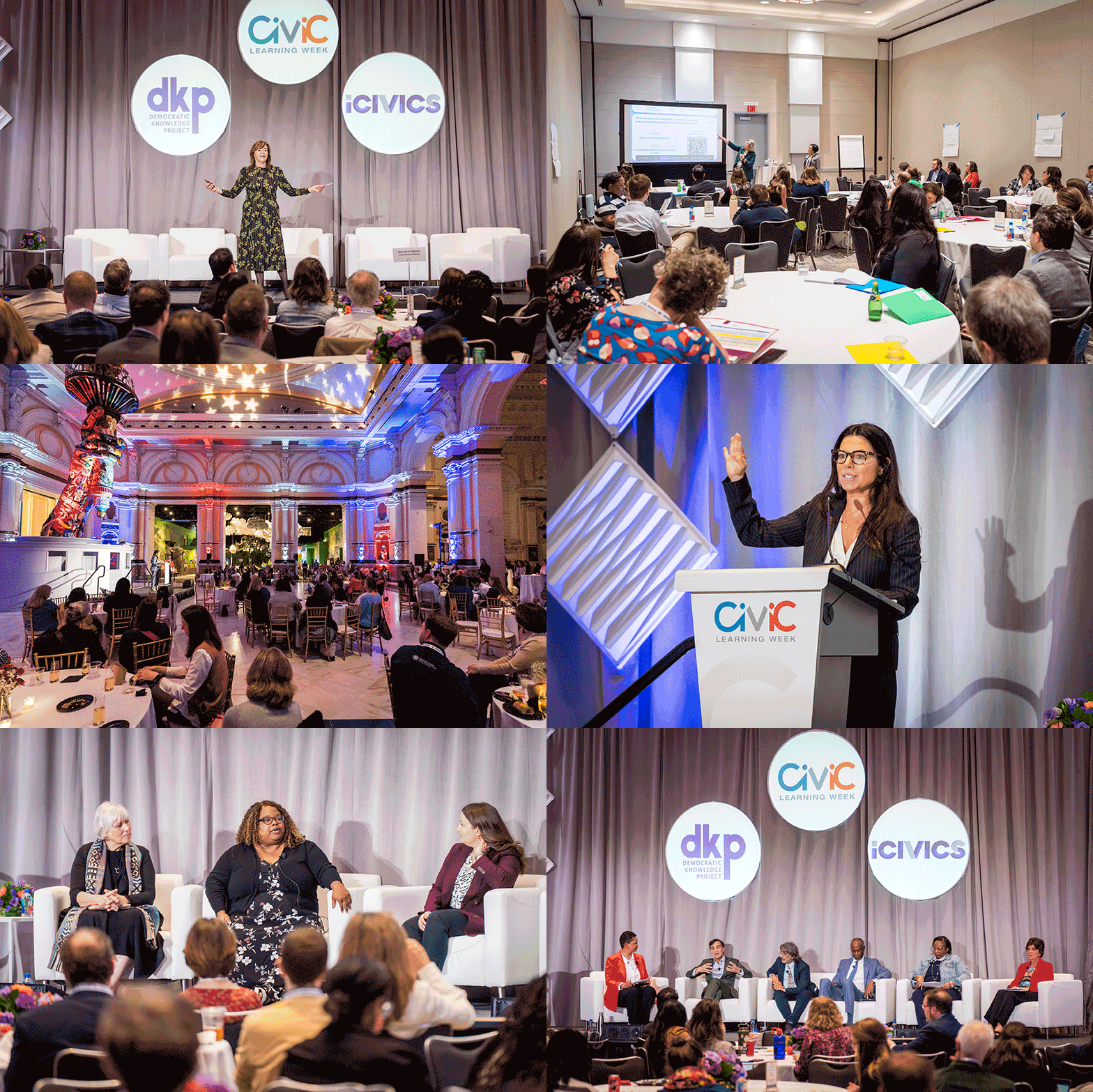
Registration is now open for the 2026 Civic Learning Week National Forum, Liberty and Learning: Civic Education at 250.

Hosted by iCivics and the Democratic Knowledge Project, the forum will be held March 9–10, 2026 at the Loews Philadelphia Hotel. We will explore key topics related to the importance of liberty and learning, what that looks like in practice, and the leadership needed to make high-quality civic education a nationwide priority.

Liberty and Learning: Civic Education at 250 Civic Learning Week National Forum logo with stylized book people and star

Book Review: Reclaiming Patriotism in an Age of Extremes

As the United States prepares for the 250th anniversary of its Declaration of Independence (A250) in July, Steven Smith’s Reclaiming Patriotism in an Age of Extremes explores the true meaning of patraiotism.

Smith defines patriotism as a form of loyalty and a “learned disposition” which is the very component of an educated mind, making the seeking of knowledge and understanding a powerful act of patriotism for A250. 

On the Road

Colorado Civic Readiness for All

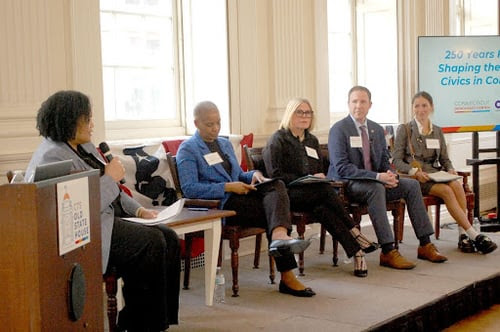
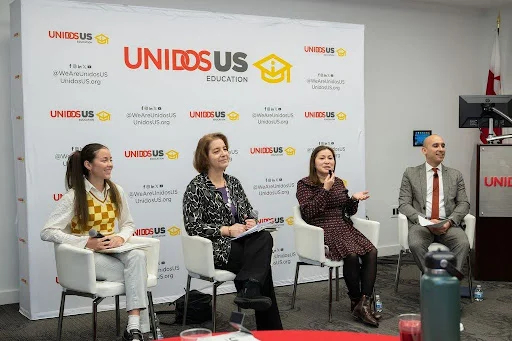
Leaders from education, policy, and community sectors gathered in Denver on Nov. 4 to leverage the upcoming 150th anniversary of Colorado’s statehood (CO150) and A250 commemorations through partnerships to ignite civic engagement.

Speakers on stage

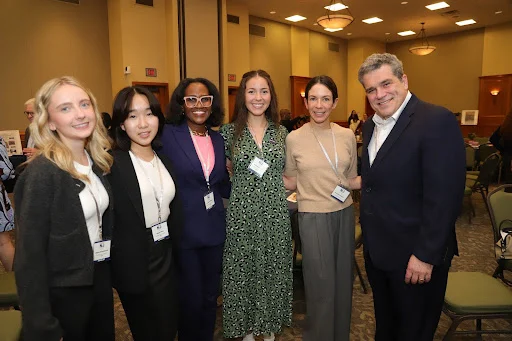
The Constitutional Democracy Project

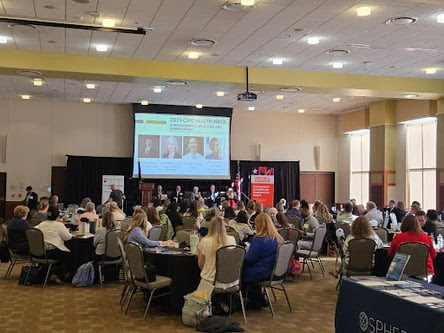
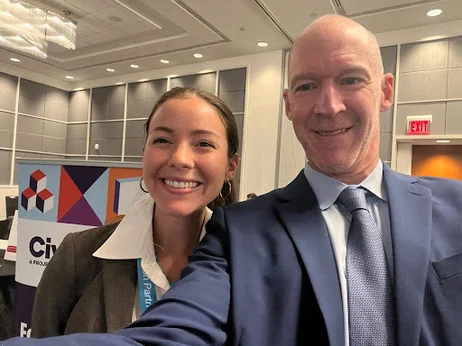
The Constitutional Democracy Project held its annual conference for civics teachers on Oct. 31, featuring a surprise appearance by Illinois Senator Dick Durbin, a longtime supporter of civics and history education.

In the News

Civics in the news as we head into Thanksgiving:

  • NPR spoke to a number of CivxNow partners in this piece about the $150 million in grants that just went to civic education.
  • Rick Hess discusses “real-world civic education” in this piece in Education Next.
  • Jeffrey Edward Green writes that civic education should challenge students in this Boston Globe piece.
  • U.S. Supreme Court Justice Neil Gorsuch told a local Fox network that lack of civic education is our country’s biggest problem—and he’s following a trend of Justices who have written children’s books. 

New Members

CivxNow continues to grow, now officially standing at more than 400 member organizations! The latest additions are: We remain deeply appreciative of member efforts and all that we accomplish together. Our goal is to aggregate and activate large networks of support to expand and re-imagine civic education as a force for civic strength. To our members, thank you for your partnership. If your organization is interested in joining CivxNow or in learning more, please contact us at CivxNow@icivics.org.

Related Posts

December 2025

Last month, our partners at the Center for Revitalizing American Institutions (RAI) at the Hoover Institution published a landscape analysis

Read More

Civic Education This Thanksgiving

When we think about Thanksgiving in the K–12 context, it’s hard not to picture turkey hats, gratitude worksheets, and children’s books about the story of Thanksgiving. For the civic learning field, this season calls us to think more deeply and build young people’s capacity to develop skills to bridge divides. To that end, in this Thanksgiving iteration of our newsletter, we invite you to:

  • Be public in your gratitude for teachers and schools. Appreciation is as core to Thanksgiving as turkey and stuffing. We invite you and your organization to use these templates to thank a few specific civic teachers and schools you work with. Appreciation is about helping people feel seen, and there is no better time to elevate these essential professionals and institutions than now.
  • Lean into the full range of lessons. In celebrating Thanksgiving, we must note that in many communities— particularly Native American communities—this can be challenging. We may be motivated to lean away from the complexities of the holiday season, but as iCivics Chief Education Officer Emma Humphries encouraged us recently, we can teach hard things—and we should. When we do, we give our young people more tools to navigate tough conversations. Get started with some lessons from our coalition partner, C-SPAN.
  • Teach to bridge divides. During a time of “lamentable civil strife,” President Lincoln’s 1863 Thanksgiving Proclamation recognized many bounties and looked to “peace, harmony, tranquility, and Union.” This is the great challenge of the Thanksgiving table: holding multiple, sometimes competing, ideas in tension and getting family and friends of divergent views and experiences to meaningfully listen and navigate differences. Check out these partner resources for bridging activities.

So happy Thanksgiving! Thank you for your work, enjoy time with your friends and family, and let’s live our time moving forward with gratitude and boldness.

November 2025

Patriotism is in the air as the United States prepares for the 250th anniversary of its Declaration of Independence in July. Yet the true meaning of patriotism and how to cultivate it among citizens is a matter of fierce debate. Steven Smith attempts to bridge current ideological chasms and offer a unifying brand of American patriotism in his 2021 book Reclaiming Patriotism in an Age of Extremes (Yale University Press).

The United States, from its inception, was a “creedal nation,” meaning that being an American meant adherence to a set of core beliefs: equality, individual rights, liberty, and limited government, among them. This is juxtaposed with an ascendant nationalism on the political right, and a cosmopolitan, or “citizens of the world” concept, prevalent on the left. Smith attempts to reclaim patriotism from these poles in this fraught political moment.

The author defines patriotism as “a form of loyalty to…one’s constitution or political regime.” American patriotism is aspirational: “To be an American is to be continually engaged in asking what it means to be an American.”

Moreover, patriotism, Smith writes, is a “learned disposition” as opposed to indoctrination. Instead, it is a “component of an educated mind.” In this sense, one of the strongest acts of patriotism we can all engage in for A250 is simply the learning and the seeking of knowledge and understanding of history and civics. 

Smith compares the Declaration of Independence and Constitution with core religious texts: the former emphasizes individual rights, while the latter establishes self-government through federalism. These seminal documents breed a form of “civic faith,” what Lincoln called the “political religion of the nation.”

We are therefore a textual people, participants in ongoing debates over the true meaning of our creed. These debates are core to American patriotism and its enlightened form that Smith elevates as the root of what makes America exceptional.

In this year of the semiquincentennial, may the teaching of American virtues, namely civility, rule of law, mutual respect, responsibility, and leadership, among others, flourish in our K–12 classrooms and cultural institutions as we pass along this precious birthright to our posterity.

New Report Highlights Civic Consequences of AI

For decades, schools have wrestled with technological change (think the internet, personal devices, social media, etc.), but not necessarily as a civic phenomenon. Meanwhile, states are bearing the consequences of declining institutions and political discourse.

That’s why, in partnership with the EDSAFE AI Alliance, CivxNow is excited to release an urgent new report, States of the Union: Rebuilding American Civics for a Digital Republic

This report is an invitation for state policymakers to consider the civic implications of artificial intelligence (AI) and how it will impact the next generation—today’s kindergartners who will be high school seniors when the U.S. Constitution turns 250.

While many reports focus on the economic effects of AI, this document emphasizes its civic consequences, specifically how it will influence citizens’ relationships with one another and with core American values like life, liberty, and the pursuit of happiness.

The report argues that because the U.S. education system is grounded in federalism, states must take action. It proposes several policy levers for state leaders to consider, including:

  • Integrating AI into courses with a focus on civic knowledge and skills;
  • Providing funding for educator professional development and learning resources;
  • Aligning state standards to include data and media literacy;
  • Ensuring assessments provide actionable information on students’ civic progress;
  • Recognizing schools that use AI to strengthen communities and democracy; and
  • Elevating information literacy as a fundamental civic skill for the 21st century.

By implementing these actions, states can ensure that the next 13 years of schooling—from the 250th anniversary of the Declaration of Independence to the 250th anniversary of the Constitution—continue to prepare students for informed civic participation.

October 2025

A recent report found that experiential learning and a focus on core civic knowledge are critical pillars of a comprehensive civic education. Experiential Civic Learning for American Democracy, produced by the Task Force on the Value of Experiential Civic Learning—composed of several CivxNow partners—defines experiential civic learning and identifies its goals, teaching practices, and barriers to participation and implementation:

  • The Task Force’s definition of experiential civic learning emphasizes the need to “actively practice democracy through real or simulated civic action.”
  • The goals of experiential civic learning align with the standard set for the field: building civic knowledge; developing civic skills; and fostering civic dispositions and virtues.
  • Barriers include policies that marginalize and deprioritize civics and a culture of conscious disengagement from our body politic. Acknowledging that traditional standardized tests fail to measure the skills and dispositions cultivated by experiential civic learning, the report also sets forth parameters for program evaluation.

The report is a companion to the 2021 Roadmap to Educating for American Democracy, and highlights best practices that can unite practitioners across diverse ideological contexts, open access to experiential learning to more students, and contribute to depolarizing the nation.

Constitution Day Reflections on the Eve of America’s 250th 

Earlier this month, we collectively celebrated Constitution Day, commemorating the signing of the U.S. Constitution in Philadelphia on September 17, 1787. As we look ahead to the nation’s semiquincentennial in July, there are both signs of hope—civic knowledge is on the rise—and concern—distrust of age-old American institutions threatens to compromise the nation’s constitutional democracy.

The Annenberg Public Policy Center’s annual survey of Americans’ constitutional knowledge found a promising increase in those able to identify the three branches of government (70%, up from 64% last year) and freedom of speech as protected by the First Amendment to the U.S. Constitution (79% versus 74% in 2024). Still concerning are the 13% of Americans who can’t identify any of the three branches of government. What’s more, none of the remaining freedoms of the First Amendment were identified by more than half of those surveyed, with freedom of religion topping out at 48%.

Far from being relegated to the pages of history, the U.S. Constitution’s relevancy today is being demonstrated as the three branches work through their balance of powers and the extent of executive power is litigated in the courts. Moreover, the limits of free speech are front and center in this period of appalling political violence. 

Perhaps most concerning among the Annenberg findings is the dramatic decline in public trust for the U.S. Supreme Court. Like so many aspects of contemporary American life, views of the Court are shaped by political affiliation, yet the problem of institutional distrust is much broader than the Court and spans the political spectrum.

This toxic mix of political polarization and lack of institutional trust threatens the strength and sustenance of our constitutional democracy, and civic education remains the most promising pathway to bridge divides and restore trust. This begins by affirming and practicing the pluralism that makes America exceptional, “with malice toward none.” In K–12 classrooms and on college campuses, we must model the norms of civil discourse and debate that are essential to the survival of this grand experiment in self-governance.

Institutional trust is admittedly earned, but it is also built through a better understanding of our federalist system and the opportunities for us to engage with government in Washington, D.C., state capitals, and our communities. Moreover, the best way to push institutions to live up to the lofty ideals set forth in the Declaration of Independence 250 years ago is through civic engagement within constitutional boundaries. As the nation prepares to celebrate its 250th, our institutions are certainly in need of a check-up. Let us work within them and across parties to “form a more perfect union” as envisioned in the U.S. Constitution.

September 2025

This month, CivxNow partner, the National Association of State Boards of Education (NASBE), published Civic-Ready Students, a civics-focused issue of their peer-reviewed journal, the State Education Standard. This edition consists of a wide variety of recommendations to state boards of education to ensure students are prepared to engage in and defend constitutional democracy in the United States. Authoring organizations include CivxNow coalition members, such as the Institute for Citizens & Scholars, Thinking Nation, History Co:Lab, Jack Miller Center, Illinois Civics Hub, Aspen Institute, Harvard University’s Democratic Knowledge Project, and iCivics.

This comprehensive collection of articles explores modern challenges and the importance of crafting high-quality civics instruction for all students, while emphasizing the need to balance foundational civic knowledge with virtues such as reflective patriotism and civil disagreement. The article, “The Science of Experiential Civics,” discusses the links to cognitive science and experiential learning, all while making the case for experiential civics in curricula. The piece, “The State of Youth Civic Engagement,” examines the attitude of our nation’s youth toward democratic participation and suggests how states could address disengagement.

While each article presents a unique case for improving civic learning, the authors harmonize in their conclusion that this discipline has suffered from a long-standing underinvestment. This issue represents a pivotal moment for our field, as it not only validates our shared goals but also illustrates a clear path forward for state education leaders to advance civic education.

2025 State Policy Scan Provides Updated Insight Into Civic Learning Policies, State by State

The CivxNow team conducts an annual scan of state policies impacting civic education. Each year, these results demonstrate progress being made at the state level and serve as a valuable resource for legislators, policymakers, school administrators, advocates, and others. The scan is based on recommendations from the CivxNow State Policy Menu, and verified by each state’s Social Studies Specialist or closest education professional. The State Policy Map allows users to view results for individual states. 

  • The scan asks about requirements for high school and middle school civics. As of this year’s policy scan, 36 states (plus DC) now require civics course time in high school in order to graduate. The number of states requiring civics in middle school remained unchanged from last year, with only five states requiring such a course through state statute. It’s important to note that most states establish middle school course time requirements through state learning standards. 
  • A civics assessment is required in 29 states. While that total number remained unchanged from the prior policy scan, the mix of states is different, with the requirement being repealed or established in various states over the past year. 
  • The most recent scan shows 17 states with programs that recognize excellence in civics among students and/or schools—an increase of 3 states since last year. 
  • The total number of states that provide credit for service-learning opportunities decreased by 1 in 2025, to a total of 39 states (plus DC), with an adjustment being made for Nevada, which does not offer credit to students for service-learning experiences, but instead requires such experiences to earn the state’s Seal of Civics. 
  • In 2025, 16 state legislatures appropriated specific funds for K–12 civic education, including curriculum development, resources, and/or professional development for civics teachers. 
  • Civics-related professional development for educators was offered in 44 states (plus DC), up from 36 in 2024. Professional development can be offered in a variety of ways, whether directly from the state’s Department of Education or through grants or third-party partnerships with nonprofit organizations.

August 2025

Last month, CivxNow partner Leadership Ohio released Join In: Revitalizing Civic Life. The report recommends Ohioans rebuild interpersonal relationships and communities through the foundational democratic pillar as old as the republic: joining together. While rooted in the Buckeye State, the report’s findings and recommendations can be generalized more broadly, inviting people to rebuild trust, strengthen democracy, and contribute to the common good through volunteerism and organizational membership.

Leadership Ohio’s Join In tour across the state found that people are spending less time with one another than ever before, stymieing opportunities to connect across differences and weakening social trust. Despite these challenges, Join In found signs of civic renewal and offers a series of recommendations to individuals and families, local businesses, philanthropic organizations, cities, and educators and schools.

Among the highlights for educators and schools are service-learning integrated across the curriculum; extracurricular activities to develop civic skills and earn civic seals; and opening schools to the larger community to host town hall meetings, cultural events, and polling stations on Election Day.