February 2026: March Momentum: Civic Learning Week, Research, and Coalition Spotlight

News From the Front Lines of Civic Education

Three Ways YOU Can Celebrate Civic Learning Week

Civic Learning Week (March 9–13) is a weeklong, high-profile celebration of civic learning, engagement, and leadership, bringing together all those committed to high-quality civic learning to energize and advance the movement to prioritize civic education across the nation.

This year’s theme, Liberty and Learning: Civic Education at 250 invokes the semiquincentennial, and invites us to connect the nation’s founding with the relevance of civic learning today and for the next 250 and beyond. We invite you to join an event, plan your own initiative, and join us for the National Forum livestream on March 9 and 10.

Research Roundup: Top Takeaways on Youth Voting in Recent Elections

Earlier this year, the Center for Information Research on Civic Learning and Engagement (CIRCLE) shared 25 data points from research released in 2025, with updated analysis of youth voting trends found in the 2024 Presidential Election, as well as in state and municipal races in 2025.
 

The report documents that while youth turnout reached 47%, significant gaps remain, with only 16% of young voters believing that democracy is currently working for them. Key findings stress that a student’s “sense of belonging” at school is a critical factor in their civic development and likelihood to vote in both local and national elections.

pie chart icon

On the Road

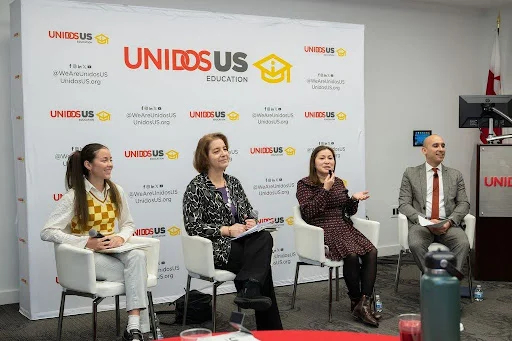
panel of speakers at Unidos US Education Community of Practiceconvening

UnidosUS Education Community of Practice

On February 3, iCivics joined UnidosUS for their annual Community of Practice Convening to discuss best practices for civic engagement. The team participated in a civic engagement panel, exploring cross-sector perspectives on public funding and education policy prior to affiliate meetings with Congressional representatives on Capitol Hill.
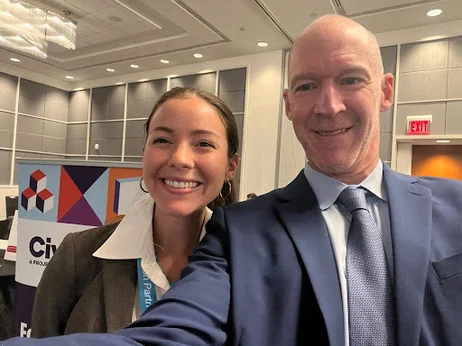
Two members of the iCivics Policy Team at the National Association of Secretaries of State Winter Conference

National Association of Secretaries of State Winter Conference

Members of the iCivics policy team attended the National Association of Secretaries of State 2026 Winter Conference to elevate the work of the CivxNow coalition. The team met with several Secretaries of State to discuss the vital role these officials play in supporting and advancing civic learning policies nationwide.

Coalition Partner Spotlight: Inquiring Minds Institute

This Civic Learning Week, the Inquiring Minds Institute is launching the Courageous Child Award, a nine-step framework where 5th graders lead a democratic process to recognize civic courage in their peers. By campaigning, voting, and presenting awards, students experience firsthand the impact of active citizenship on their school community.
In the News

As we head toward Civic Learning Week, civics is in the news:

  • The Lincoln Presidential Foundation’s Erin Carlson Mast and iCivics’ Chief Policy and Advocacy Officer Shawn Healy made an appeal for civics on Presidents’ Day in the Chicago Tribune
  • The Christian Science Monitor editorial board makes the case for civic education during America’s 250th
  • The Pittsburgh Post-Gazette tells the story of a local civics educator
  • Rick Hess used his column in Education Week to discuss with Ashley Berner, Director of the Johns Hopkins Institute for Education Policy, what the erosion of civil society means for schools

New Members

CivxNow continues to grow, now officially standing at more than 400 member organizations! The latest additions are: We remain deeply appreciative of member efforts and all that we accomplish together. Our goal is to aggregate and activate large networks of support to expand and re-imagine civic education as a force for civic strength. To our members, thank you for your partnership. If your organization is interested in joining CivxNow or in learning more, please contact us at CivxNow@icivics.org.

Related Posts

February 2026

Forty-seven percent of young voters (ages 18–29) cast ballots in 2024, down three points from 2020, but eclipsing 2016 turnout
Read More

February 2026

Forty-seven percent of young voters (ages 18–29) cast ballots in 2024, down three points from 2020, but eclipsing 2016 turnout (39%). This is the top takeaway from our partners at the Center for Information Research on Civic Learning and Engagement (CIRCLE) based on their 2025 analyses of the 2024 Presidential Election and 2025 contests in New Jersey, Virginia, and New York City.

Other key findings include:

  • Persistent gender and racial/ethnic gaps in youth voting, with 58% of White women voting in 2024 compared to 25% of Black men. Young voters of color say they disproportionately lack information about the voting process.
  • Huge swings in youth turnout by state, from a high of 62% in Minnesota to the low of 33% in Arkansas. Turnout tends to correlate with the state’s political competitiveness.
  •  A mere 16% of young voters believe democracy is working for them, a figure that, if left unaddressed, can drive even more potential voters to the sidelines.

This fall’s midterm elections present another teachable moment for the civic learning movement. CIRCLE found that fewer than half of youth surveyed (48%) felt a sense of belonging—a critical factor in students’ civic development—in school. However, two-thirds of those who vote in every national election reported a sense of belonging, as did 58% who vote in local elections or participate in local government.

Let’s commit to teaching students about voting processes and the candidates and issues on the ballot this fall, but also attend to their whole being, supporting schools in practicing the tenets of our constitutional democracy daily.

Three Ways YOU Can Celebrate Civic Learning Week

Civic Learning Week (March 9–13) is a weeklong national celebration that highlights the importance of civic education in sustaining and strengthening our constitutional democracy, bringing together students, educators, policymakers, and civic leaders across sectors. During the nation’s semiquincentennial, this movement serves as a catalyst for uplifting youth and preparing our communities for the next 250 years and beyond. Here are three things you can do to celebrate Civic Learning Week:

  1. Plan Your Own Initiative for Civic Learning Week

    Use Civic Learning Week as a way to engage your own networks, communities, and classrooms in conversations about civic education, empowering youth, and community engagement. This is an opportunity to further amplify the work you are already doing toward strengthening civic education, constitutional democracy, and youth.

    If you are an educator or school leader, use an official Civic Learning Week resource to engage your students in an activity or lesson during March 9–13. Upload your school-based activity to show others how your classroom celebrated Civic Learning Week and uplifted civic education.

    Plan your own public event, activity, or initiative and submit it on the website to become an official Civic Learning Week partner. Collaborate with other civic leaders, organizations, and community members to plan this event and broaden your audience.

    Spread the word about Civic Learning Week and civic education! Highlight the work you are already engaging in to strengthen civic learning and constitutional democracy. Use this social media toolkit for sample language, graphic assets, and more.

  2. Join an Event

    Throughout Civic Learning Week, there are many in-person and online events, activations, and initiatives hosted by CivxNow members and other leaders across the nation. Look through the Civic Learning Week calendar to learn about these events, or check out the map to see what’s happening in your state or community. Use this as an opportunity to spread the word and encourage your colleagues, network, or communities to join Civic Learning Week events or activities.

  3. Register for the National Forum Livestream

    The Civic Learning Week National Forum serves as an anchor for Civic Learning Week. In anticipation of the nation’s semiquincentennial, this year’s theme is Liberty and Learning: Civic Education at 250.

    While we have reached capacity for the in-person event in Philadelphia, we invite you to join us virtually via the National Forum livestream. Tune in March 9 and 10 to explore how educators, policymakers, researchers, academics, and private- and public-sector leaders are energizing the movement to advance high-quality civic education nationwide.

Dec 2025: Our 2025 Impact: Celebrating Wins and Planning the Road Ahead

News From the Front Lines of Civic Education

Crucial March Toward Stronger Civic Education Continued in 2025

This year, we continued our crucial march to strengthen K–12 civic learning from coast to coast.

Through the strength of our coalition, which now stands at over 400 members, we celebrated educators, elevated teacher voices in Washington, D.C., and ensured civic learning is central to the planning for the nation’s 250th.

Plan Your Civic Learning Week Involvement

Use the Organization/Influencer Toolkit to access resources to help you plan and communicate your participation in Civic Learning Week 2026.

The toolkit includes planning resources, tips for engaging youth voice, sample social media posts, graphic assets, sample emails and press materials, and more.

Research Roundup: Hoover Institution Completes Civic Learning Landscape Analysis

Last month, the Hoover Institution published a comprehensive landscape analysis of The American Civic Education System.
 
The report documents that the marginalization of civic learning is generational and that efforts to scale solutions often lack coherence. Key observations stress that political polarization must be mitigated, and that educators require more in-person professional development.
pie chart icon

On the Road

Hill Day picture of participants behind podium
Photo of Hill Day participants in Congressional office

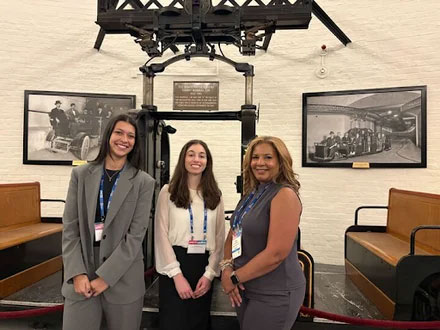
State Policy Lead Andrea Benites and Policy Associate Sydney Moore attended the 105th National Council for the Social Studies (NCSS) Annual Conference in Washington, D.C.

The conference featured a powerful Hill Day where the team supported teachers in advocating for increased investment in civics education on Capitol Hill. Energizing keynote sessions left a lasting impression on the CivxNow team.

In the News

Winter Break reading:

  • NPR takes a look at a long-running moot court contest in NYC that teaches high school students how government works.
  • iCivics CEO Louise Dubé and Chief Education Officer Emma Humphries penned a piece for AllSides about why we must continue to teach hard topics.
  • James Traub asks if we could pass the updated naturalization civics test in this op-ed in The New York Times.
  • Wisconsin Watch explains how a retiree’s passion for local office sparked a statewide high school civics contest.

New Members

CivxNow continues to grow, now officially standing at more than 400 member organizations! The latest additions are: We remain deeply appreciative of member efforts and all that we accomplish together. Our goal is to aggregate and activate large networks of support to expand and re-imagine civic education as a force for civic strength. To our members, thank you for your partnership. If your organization is interested in joining CivxNow or in learning more, please contact us at CivxNow@icivics.org.

Related Posts

February 2026

Forty-seven percent of young voters (ages 18–29) cast ballots in 2024, down three points from 2020, but eclipsing 2016 turnout
Read More

December 2025

Last month, our partners at the Center for Revitalizing American Institutions (RAI) at the Hoover Institution published a landscape analysis of The American Civic Education System. Based on an extensive literature review, individual interviews and focus groups, and a survey of educators and students, RAI documented three broad trends all too familiar to the civic learning field:

  1. The marginalization of civic learning is generational in nature;
  2. Civic learning is vital to the strength and sustenance of our constitutional democracy and transcends ideological divides; and
  3. While the civic learning field has rallied to meet the challenge of the moment, our efforts often lack coherence and we struggle to scale them across our P-20 system.

The report proceeds to make more specific observations, several of which bear repeating:

  • While tensions between liberty and democracy are inherent to our system, toxic political polarization is not and must be mitigated;
  • Civic learning must be taught as a stand-alone subject across grade bands, but also integrated across subject areas to ensure greater emphasis;
  • There is no shortage of civics curricula and resources, but there are a dearth of materials focused on international relations, military, and national security;
  • Civic learning is excessively siloed within K–12, higher education, and civil society; and
  • Educators want greater access to in person professional development opportunities where they engage with subject matter experts and learn from one another in community.

The authors conclude by recognizing the role for bridge-building leaders and institutions given the aforementioned challenges, one that the CivxNow coalition aspires to play with its 400-plus, pluralistic members in partnership with RAI. This report is an important contribution to our collective work to strengthen our P-20 civic education system.

Nov 2025: Civic Education This Season: Bridge Divides and A250 Prep

News From the Front Lines of Civic Education

Civic Education This Thanksgiving

This season, we look beyond the tradition of turkey hats to focus on the civic learning field’s deeper purpose: building young people’s capacity to navigate complexity and bridge divides.

We invite you to engage in three essential actions that elevate educators and strengthen classroom conversations. 

Civic Learning Week National Forum

Registration is now open for the 2026 Civic Learning Week National Forum, Liberty and Learning: Civic Education at 250.

Hosted by iCivics and the Democratic Knowledge Project, the forum will be held March 9–10, 2026 at the Loews Philadelphia Hotel. We will explore key topics related to the importance of liberty and learning, what that looks like in practice, and the leadership needed to make high-quality civic education a nationwide priority.

Liberty and Learning: Civic Education at 250 Civic Learning Week National Forum logo with stylized book people and star

Book Review: Reclaiming Patriotism in an Age of Extremes

As the United States prepares for the 250th anniversary of its Declaration of Independence (A250) in July, Steven Smith’s Reclaiming Patriotism in an Age of Extremes explores the true meaning of patriotism.

Smith defines patriotism as a form of loyalty and a “learned disposition” which is the very component of an educated mind, making the seeking of knowledge and understanding a powerful act of patriotism for A250. 

On the Road

Colorado Civic Readiness for All

Leaders from education, policy, and community sectors gathered in Denver on Nov. 4 to leverage the upcoming 150th anniversary of Colorado’s statehood (CO150) and A250 commemorations through partnerships to ignite civic engagement.

Speakers on stage

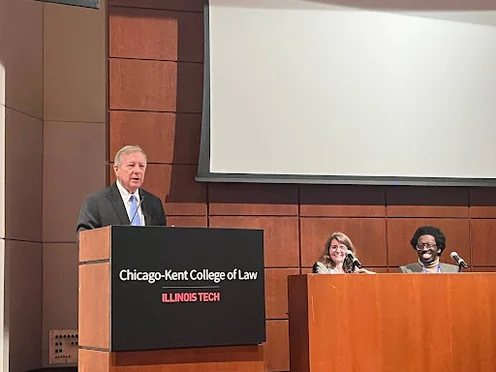
The Constitutional Democracy Project

The Constitutional Democracy Project held its annual conference for civics teachers on Oct. 31, featuring a surprise appearance by Illinois Senator Dick Durbin, a longtime supporter of civics and history education.

In the News

Civics in the news as we head into Thanksgiving:

  • NPR spoke to a number of CivxNow partners in this piece about the $150 million in grants that just went to civic education.
  • Rick Hess discusses “real-world civic education” in this piece in Education Next.
  • Jeffrey Edward Green writes that civic education should challenge students in this Boston Globe piece.
  • U.S. Supreme Court Justice Neil Gorsuch told a local Fox network that lack of civic education is our country’s biggest problem—and he’s following a trend of Justices who have written children’s books. 

New Members

CivxNow continues to grow, now officially standing at more than 400 member organizations! The latest additions are: We remain deeply appreciative of member efforts and all that we accomplish together. Our goal is to aggregate and activate large networks of support to expand and re-imagine civic education as a force for civic strength. To our members, thank you for your partnership. If your organization is interested in joining CivxNow or in learning more, please contact us at CivxNow@icivics.org.

Related Posts

February 2026

Forty-seven percent of young voters (ages 18–29) cast ballots in 2024, down three points from 2020, but eclipsing 2016 turnout
Read More

Civic Education This Thanksgiving

When we think about Thanksgiving in the K–12 context, it’s hard not to picture turkey hats, gratitude worksheets, and children’s books about the story of Thanksgiving. For the civic learning field, this season calls us to think more deeply and build young people’s capacity to develop skills to bridge divides. To that end, in this Thanksgiving iteration of our newsletter, we invite you to:

  • Be public in your gratitude for teachers and schools. Appreciation is as core to Thanksgiving as turkey and stuffing. We invite you and your organization to use these templates to thank a few specific civic teachers and schools you work with. Appreciation is about helping people feel seen, and there is no better time to elevate these essential professionals and institutions than now.
  • Lean into the full range of lessons. In celebrating Thanksgiving, we must note that in many communities— particularly Native American communities—this can be challenging. We may be motivated to lean away from the complexities of the holiday season, but as iCivics Chief Education Officer Emma Humphries encouraged us recently, we can teach hard things—and we should. When we do, we give our young people more tools to navigate tough conversations. Get started with some lessons from our coalition partner, C-SPAN.
  • Teach to bridge divides. During a time of “lamentable civil strife,” President Lincoln’s 1863 Thanksgiving Proclamation recognized many bounties and looked to “peace, harmony, tranquility, and Union.” This is the great challenge of the Thanksgiving table: holding multiple, sometimes competing, ideas in tension and getting family and friends of divergent views and experiences to meaningfully listen and navigate differences. Check out these partner resources for bridging activities.

So happy Thanksgiving! Thank you for your work, enjoy time with your friends and family, and let’s live our time moving forward with gratitude and boldness.

November 2025

Patriotism is in the air as the United States prepares for the 250th anniversary of its Declaration of Independence in July. Yet the true meaning of patriotism and how to cultivate it among citizens is a matter of fierce debate. Steven Smith attempts to bridge current ideological chasms and offer a unifying brand of American patriotism in his 2021 book Reclaiming Patriotism in an Age of Extremes (Yale University Press).

The United States, from its inception, was a “creedal nation,” meaning that being an American meant adherence to a set of core beliefs: equality, individual rights, liberty, and limited government, among them. This is juxtaposed with an ascendant nationalism on the political right, and a cosmopolitan, or “citizens of the world” concept, prevalent on the left. Smith attempts to reclaim patriotism from these poles in this fraught political moment.

The author defines patriotism as “a form of loyalty to…one’s constitution or political regime.” American patriotism is aspirational: “To be an American is to be continually engaged in asking what it means to be an American.”

Moreover, patriotism, Smith writes, is a “learned disposition” as opposed to indoctrination. Instead, it is a “component of an educated mind.” In this sense, one of the strongest acts of patriotism we can all engage in for A250 is simply the learning and the seeking of knowledge and understanding of history and civics. 

Smith compares the Declaration of Independence and Constitution with core religious texts: the former emphasizes individual rights, while the latter establishes self-government through federalism. These seminal documents breed a form of “civic faith,” what Lincoln called the “political religion of the nation.”

We are therefore a textual people, participants in ongoing debates over the true meaning of our creed. These debates are core to American patriotism and its enlightened form that Smith elevates as the root of what makes America exceptional.

In this year of the semiquincentennial, may the teaching of American virtues, namely civility, rule of law, mutual respect, responsibility, and leadership, among others, flourish in our K–12 classrooms and cultural institutions as we pass along this precious birthright to our posterity.

Oct 2025: Civic Consequences of AI and Experiential Learning Research

News From the Front Lines of Civic Education

New Report Highlights Civic Consequences of AI

In partnership with the EDSAFE AI Alliance, CivxNow is excited to release an urgent new report, States of the Union: Rebuilding American Civics for a Digital Republic

While many reports focus on the economic effects of AI, this document emphasizes its civic consequences, specifically how it will influence citizens’ relationships with one another and with core American values like life, liberty, and the pursuit of happiness.

Civic Holidays Spotlight

We are grateful to CivxNow members New Voters, Blue Star Families, and the Lincoln Presidential Foundation for leading celebrations around three upcoming civic holidays: Election Day; Veterans Day; and Thanksgiving.
star icon

Research Roundup: Experiential Civic Learning for American Democracy

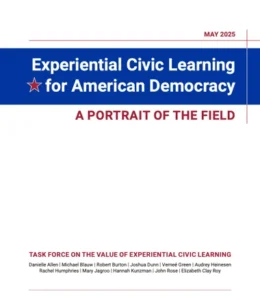
Experiential Learning research report cover

This month, the Task Force on the Value of Experiential Civic Learning—composed of several CivxNow partners—produced Experiential Civic Learning for American Democracy: A Portrait of the Field.

The report found that experiential learning and a focus on core civic knowledge are critical pillars of a comprehensive civic education. It defines experiential civic learning and identifies its goals, teaching practices, and barriers to participation and implementation.

On the Road

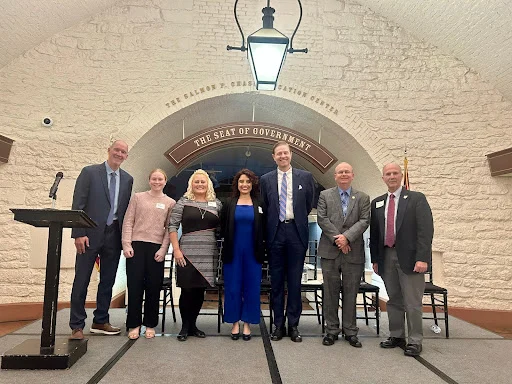
group of people standing in front of stone arch

Civic Readiness for All

Civic Readiness for All took place on Oct. 15 at the Ohio Statehouse. The event featured a panel moderated by Shawn Healy and included Mya Baker, alongside other key stakeholders, all working to strengthen K–12 civic education in the Buckeye State.

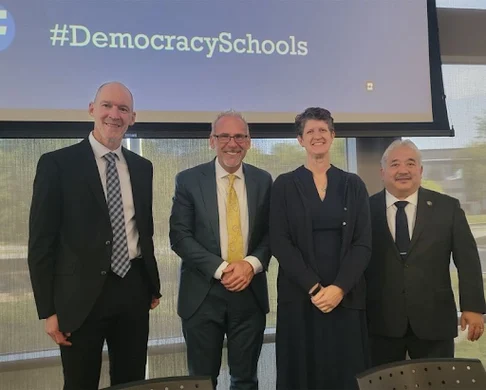
group of people standing in front of projection screen with text reading #DemocracySchools

Democracy Schools

Illinois Democracy Schools held a daylong civic learning convening on Sept. 23. The event, moderated by Shawn Healy, featured an opening panel of state superintendents from Hawaii, Illinois, and Wisconsin, alongside delegations from other states who are working to launch or scale civics recognition programs for schools.

In the News

It was a big month for civics:

New Members

CivxNow continues to grow, now officially standing at more than 400 member organizations! The latest additions are: We remain deeply appreciative of member efforts and all that we accomplish together. Our goal is to aggregate and activate large networks of support to expand and re-imagine civic education as a force for civic strength. To our members, thank you for your partnership. If your organization is interested in joining CivxNow or in learning more, please contact us at CivxNow@icivics.org.

Related Posts

February 2026

Forty-seven percent of young voters (ages 18–29) cast ballots in 2024, down three points from 2020, but eclipsing 2016 turnout

Read More

New Report Highlights Civic Consequences of AI

For decades, schools have wrestled with technological change (think the internet, personal devices, social media, etc.), but not necessarily as a civic phenomenon. Meanwhile, states are bearing the consequences of declining institutions and political discourse.

That’s why, in partnership with the EDSAFE AI Alliance, CivxNow is excited to release an urgent new report, States of the Union: Rebuilding American Civics for a Digital Republic

This report is an invitation for state policymakers to consider the civic implications of artificial intelligence (AI) and how it will impact the next generation—today’s kindergartners who will be high school seniors when the U.S. Constitution turns 250.

While many reports focus on the economic effects of AI, this document emphasizes its civic consequences, specifically how it will influence citizens’ relationships with one another and with core American values like life, liberty, and the pursuit of happiness.

The report argues that because the U.S. education system is grounded in federalism, states must take action. It proposes several policy levers for state leaders to consider, including:

  • Integrating AI into courses with a focus on civic knowledge and skills;
  • Providing funding for educator professional development and learning resources;
  • Aligning state standards to include data and media literacy;
  • Ensuring assessments provide actionable information on students’ civic progress;
  • Recognizing schools that use AI to strengthen communities and democracy; and
  • Elevating information literacy as a fundamental civic skill for the 21st century.

By implementing these actions, states can ensure that the next 13 years of schooling—from the 250th anniversary of the Declaration of Independence to the 250th anniversary of the Constitution—continue to prepare students for informed civic participation.