Oct 2025: Civic Consequences of AI and Experiential Learning Research

News From the Front Lines of Civic Education

New Report Highlights Civic Consequences of AI

In partnership with the EDSAFE AI Alliance, CivxNow is excited to release an urgent new report, States of the Union: Rebuilding American Civics for a Digital Republic

While many reports focus on the economic effects of AI, this document emphasizes its civic consequences, specifically how it will influence citizens’ relationships with one another and with core American values like life, liberty, and the pursuit of happiness.

Civic Holidays Spotlight

We are grateful to CivxNow members New Voters, Blue Star Families, and the Lincoln Presidential Foundation for leading celebrations around three upcoming civic holidays: Election Day; Veterans Day; and Thanksgiving.
star icon

Research Roundup: Experiential Civic Learning for American Democracy
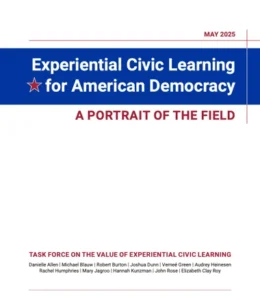
Experiential Learning research report cover

This month, the Task Force on the Value of Experiential Civic Learning—composed of several CivxNow partners—produced Experiential Civic Learning for American Democracy: A Portrait of the Field.

The report found that experiential learning and a focus on core civic knowledge are critical pillars of a comprehensive civic education. It defines experiential civic learning and identifies its goals, teaching practices, and barriers to participation and implementation.

On the Road
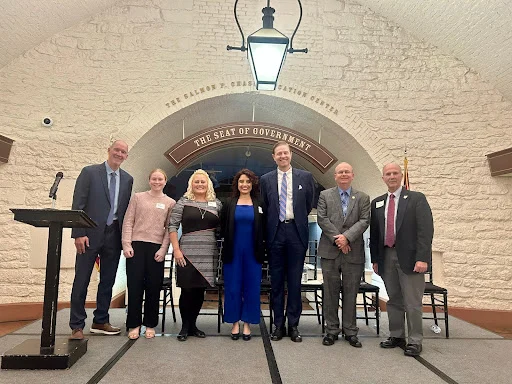
group of people standing in front of stone arch

Civic Readiness for All

Civic Readiness for All took place on Oct. 15 at the Ohio Statehouse. The event featured a panel moderated by Shawn Healy and included Mya Baker, alongside other key stakeholders, all working to strengthen K–12 civic education in the Buckeye State.
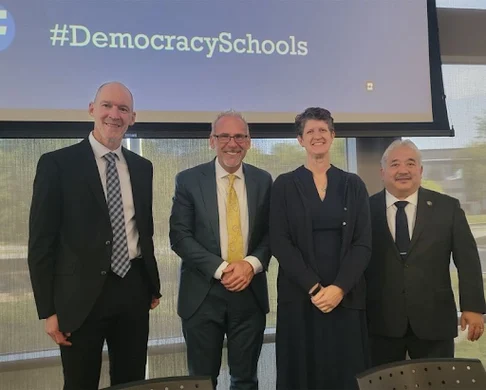
group of people standing in front of projection screen with text reading #DemocracySchools

Democracy Schools

Illinois Democracy Schools held a daylong civic learning convening on Sept. 23. The event, moderated by Shawn Healy, featured an opening panel of state superintendents from Hawaii, Illinois, and Wisconsin, alongside delegations from other states who are working to launch or scale civics recognition programs for schools.

In the News

It was a big month for civics:

New Members

CivxNow continues to grow, now officially standing at more than 400 member organizations! The latest additions are: We remain deeply appreciative of member efforts and all that we accomplish together. Our goal is to aggregate and activate large networks of support to expand and re-imagine civic education as a force for civic strength. To our members, thank you for your partnership. If your organization is interested in joining CivxNow or in learning more, please contact us at CivxNow@icivics.org.

Related Posts

February 2026

Forty-seven percent of young voters (ages 18–29) cast ballots in 2024, down three points from 2020, but eclipsing 2016 turnout

Read More

New Report Highlights Civic Consequences of AI

For decades, schools have wrestled with technological change (think the internet, personal devices, social media, etc.), but not necessarily as a civic phenomenon. Meanwhile, states are bearing the consequences of declining institutions and political discourse.

That’s why, in partnership with the EDSAFE AI Alliance, CivxNow is excited to release an urgent new report, States of the Union: Rebuilding American Civics for a Digital Republic

This report is an invitation for state policymakers to consider the civic implications of artificial intelligence (AI) and how it will impact the next generation—today’s kindergartners who will be high school seniors when the U.S. Constitution turns 250.

While many reports focus on the economic effects of AI, this document emphasizes its civic consequences, specifically how it will influence citizens’ relationships with one another and with core American values like life, liberty, and the pursuit of happiness.

The report argues that because the U.S. education system is grounded in federalism, states must take action. It proposes several policy levers for state leaders to consider, including:

  • Integrating AI into courses with a focus on civic knowledge and skills;
  • Providing funding for educator professional development and learning resources;
  • Aligning state standards to include data and media literacy;
  • Ensuring assessments provide actionable information on students’ civic progress;
  • Recognizing schools that use AI to strengthen communities and democracy; and
  • Elevating information literacy as a fundamental civic skill for the 21st century.

By implementing these actions, states can ensure that the next 13 years of schooling—from the 250th anniversary of the Declaration of Independence to the 250th anniversary of the Constitution—continue to prepare students for informed civic participation.

October 2025

A recent report found that experiential learning and a focus on core civic knowledge are critical pillars of a comprehensive civic education. Experiential Civic Learning for American Democracy, produced by the Task Force on the Value of Experiential Civic Learning—composed of several CivxNow partners—defines experiential civic learning and identifies its goals, teaching practices, and barriers to participation and implementation:

  • The Task Force’s definition of experiential civic learning emphasizes the need to “actively practice democracy through real or simulated civic action.”
  • The goals of experiential civic learning align with the standard set for the field: building civic knowledge; developing civic skills; and fostering civic dispositions and virtues.
  • Barriers include policies that marginalize and deprioritize civics and a culture of conscious disengagement from our body politic. Acknowledging that traditional standardized tests fail to measure the skills and dispositions cultivated by experiential civic learning, the report also sets forth parameters for program evaluation.

The report is a companion to the 2021 Roadmap to Educating for American Democracy, and highlights best practices that can unite practitioners across diverse ideological contexts, open access to experiential learning to more students, and contribute to depolarizing the nation.